We built our client its own AI brain. It knows their business better than any report. Their CEO asks anything, and it answers in seconds.
Here is the uncomfortable truth about running a company.
You only see your business when someone shows it to you. The rest of the time you run on instinct, and the cracks you can't see are the ones that hurt: the cost that crept up, the good customer quietly leaving, the margin that slipped while everyone was busy. By the time it reaches your desk, it has already happened.
Now imagine the opposite. Every number, every contract and every customer conversation in your company, alive in one brain. You ask what is going on, and it tells you. You ask what to do next, and it tells you that too. Any second of any day.
Most CEOs will not have this for years. Our client has it today.
This is not a concept video. Watch.
Our client: a Saudi consumer lender. Figures adjusted for confidentiality.
Ask it anything
1How is my business really doing?
Answer
The company is loss-making; fix the cost base first. A SAR 16M profit in 2025 becomes a SAR 16M loss at this year's pace. Income fell from SAR 201M to SAR 158M while running costs rose from SAR 167M to SAR 188M. Without a one-off credit release, the underlying loss is about SAR 30M.
Source: company 2025 and first-half 2026 statements
2How am I doing against my peers?
Answer
You earn the same lending margin as your strongest peers. But running costs take 119% of your income, against 48–59% at the best of them. Your loan book has shrunk by a third since 2023. Your costs did not follow.
Source: peer statements, same periods, same arithmetic
3What is the one move that improves my business the most?
Answer
Bring running costs down by about a fifth. That takes them from SAR 188M to about SAR 150M, below income, and closes the gap. Most of the fix is management, not technology.
Source: profit bridge · cost base by line
4Which AI initiative gets me there fastest?
Answer
Cost Radar. It reads the ledger, contracts and invoices across the company and flags where money leaks: software seats paid for and never used, suppliers priced above market, the same tool bought twice by two teams. Target: SAR 20–31M a year.
Source: ledger · contracts · invoices
Not a report. A recommendation: what to do, in what order, and what it is worth.
In your pocket
The same brain goes wherever our client's CEO goes. On the way into a meeting, by chat or by voice, the answer is there in seconds.
Reports tell you what happened. A company brain tells you what to do next.
Here is how we built it for them.
Why now
Until this year, nobody could read everything a company knows: board packs, spreadsheets, contracts, inboxes, chats. So companies ran on summaries.
That has changed. Frontier models now reason over long, messy documents. Fast classifiers read millions of small items. Together, a company can read itself and tell its leaders what to do next.
The technology is the enabler, not the starting point. Every engagement starts with the business: what it earns, what it spends, where it leaks. The brain is built around that.
"Business first. AI is the enabler."
Step 1 · Start with the business
Before any AI, we read our client's business the way a board member would, so the brain knows what actually matters.
Three years of annual statements and the latest half year, rebuilt from the top down in riyals and in percentages. Where does the money come from, where does it go, and what changed? This year's figures are the first half doubled: a run-rate, so the board sees where the year is heading.
Then we put our client beside three peers, over the same periods, with the same arithmetic. The margins match. The costs do not.
| 2026 run-rate | Our client | Peer A | Peer B | Peer C |
|---|---|---|---|---|
| Loan book, SAR M | 1,110 | 1,000 | 700 | 230 |
| Lending margin | 10.4% | 10.1% | 10.6% | 9.1% |
| Costs as a share of income | 119% | 59% | 48% | 82% |
| Return on equity | −2.0% | 4.6% | 5.5% | −11.5% |
Not every company has a board. Every company has a leadership team making the same calls. This step is the same for both.
Step 2 · Give the company one brain
Then we put everything our client's leadership relies on into one brain, so their CEO can ask it anything.
In go the board packs and their earlier versions, the statements, the profit model, policies, contracts and our own analysis. Each document is split into small pieces. Each piece carries a header saying which company, which source, which version and which chapter it came from, and a label: verified, derived, estimate or test data. So every answer comes with where it came from and how firm it is.
Our client · Board pack · latest · Against peers Verified
Running costs take 119% of income, against 48–59% at the best peers.
When a document changes, the brain catches up within minutes. Every earlier version stays, so the board can ask what changed and why.
We test it like an exam: twenty questions a board would ask. For 19 or 20 of them, the right source comes back at the top.
We built this for ourselves first. Our own company runs on one brain: every chat, document and decision in one place that we own. For clients, it is built to run in their own environment, owned by them.
Step 3 · Read the whole company
Next, we read every one of the client's applications, messages and records.
Psychologists split thinking in two. System 2 is slow and deliberate: the reasoning you use on a hard problem. System 1 is fast and automatic: recognising a face, sorting the post.
Large AI models are System 2: brilliant, and built for depth, not for reading every application, message and invoice a company has ever produced. A new generation of fast classifiers is System 1 for a company. It reads one small item and gives one short answer from a fixed list, in a fraction of a second. These classifiers are only weeks old, and we already run them in the market. We call the approach System One. It asks six kinds of question:
Exact rules, such as salary limits and affordability caps, run in code right beside it, so every result is precise.
In one run, System One sorted about 170,000 items: why every lost application was lost, which customer messages showed early strain, and which of dozens of spellings were the same employer.
Step 4 · Rehearse on a digital twin
Then we tested every idea on a replica of the customers, so no real one was touched.
You cannot experiment on a lender's real borrowers. So we built a digital twin of our client's customers: a generated customer base with the same shape as the business. It holds 48,000 applications over two years, about 17,000 loans and more than 120,000 customer messages.
On the twin we tested three ideas:
- Good customers lost to slow decisions. About 2,400 good applicants walked away while they waited.
- Trouble before it arrives. 68% of the loans that went bad showed a warning in the customer's own messages, about 52 days before collections first called.
- Checks a rule could have stopped. About a quarter of paid credit checks could be stopped by simple rules before they cost anything.
One twin customer, start to finish
Then comes the shadow run: the system works beside real decisions and proves itself against what actually happened, before it acts.
Step 5 · Rank by money
We set hard targets for the business first, so the brain can say what to do first and what it is worth.
Our client's board did not want a list of AI ideas. It wanted to know what to do first and what it is worth. So the targets came before the tools:
Then four AI initiatives, each tied to a move, each with a first proof:
Serves: Running costs
Cost RadarReads the ledger, contracts, invoices and processes and flags where money leaks.
First proof: A full cost map, line by line, against market prices
SAR 20–31M a year
Serves: Loan book
Buyout ShieldFinds the good borrowers rivals can take, and makes the company's offer first.
First proof: Last year's early settlements, split by who refinanced elsewhere
About SAR 10M a year per SAR 100M kept
Serves: Credit losses
Default DetectorReads customer messages for early strain, weeks before a missed payment.
First proof: Past messages replayed against real arrears
SAR 4–7M a year
Serves: Income and loan book
Growth EngineLends more to customers who have already proven they pay.
First proof: A small offer to proven payers, with consented bank data
SAR 8–16M a year
Step 6 · Go deep: who could take your best customers?
Then we went deep on one decision every lender faces: which customers to protect first.
A lender's best borrowers are someone else's target. A rival can pay off a good borrower's loan and offer fresh cash or a lower payment. The borrower leaves, and the income leaves too.
Buyout Shield works it out one borrower at a time. It takes the salary, the other debts and what is left on the loan. It calculates what each of six rival lenders could offer within the affordability limit, at their own historical prices, and how much cash the borrower would walk away with.
The pattern is striking. A mid-salary borrower two years into a five-year loan can be taken by all six rivals. A lower-salary borrower early in a loan cannot be taken by any of them. So the company knows which borrowers to protect first.
Then our client makes its own offer first: it refinances a good borrower at its usual rate with fresh cash, and the monthly payment still goes down. Keeping that one borrower is worth about SAR 25,000 over the loan. Across the book, SAR 45M to 178M is within rivals' reach, depending on how hard they compete.
Buyout Shield · one borrower
6 of 6 rivals can take this borrower
A mid-salary borrower, two years into a five-year loan.
To pay off today: SAR 63,500
Our client's offer, first
Refinance at its usual rate with SAR 20,000 fresh cash. Monthly payment 2,833 → 2,366.
Outside lending, it is the same question in different words: which of my best customers could a competitor take tomorrow, and with what offer?
Become the AI leader of your industry
Every board is now asked the same question by its investors, its analysts and its own people: what is your AI story?
Most companies answer with pilots and press releases, and the market can tell the difference. A company brain is a different answer. It finds what actually moves the numbers (the cost line, the customers kept, the growth that pays) and puts AI behind exactly that. When the next quarterly results come, AI is not a slide in the deck. It is in the margin.
Our client is a traditional lender. A few years ago, running a company like theirs on its own AI brain would have sounded like science fiction. Today it is how their CEO decides what to do next.
That can be your organisation. The same brain, asked the questions that matter at your scale:
- A multinational group: "Which of our operating companies is quietly losing margin, and what will move this quarter's numbers most?"
- A national programme: "Which of our major contracts are drifting past budget, which clauses let us recover the cost, and what does the board need to decide this month?"
- A global bank or insurer: "Which of our most valuable clients are being approached by competitors, and what do we offer them first?"
- A holding company: "Across every company we own, which one needs the board's attention first, and why?"
Every industry will have one company that gets there first and becomes its AI leader. We would like it to be yours.
Let's talk
Stop waiting for reports. Ask your company what to do next.

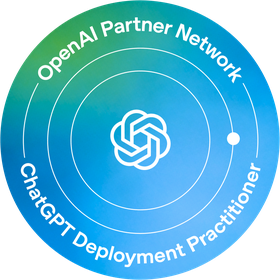
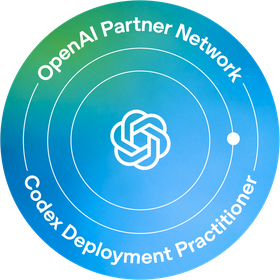
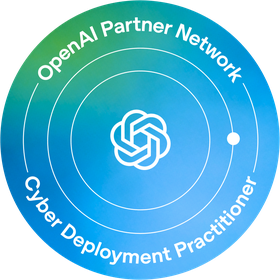
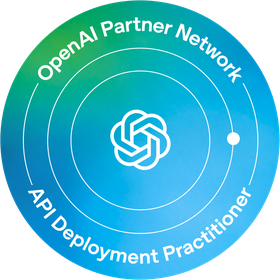
Our OpenAI Partner Network credentials
SoyakaAI · Strategy, solutions and deployment





Technical & deployment

Make your next AI move a deliberate one.
Choosing a model is only the beginning. How will your people work differently, and what needs to change in how you lead?
I advise boards and C-level teams on becoming AI-native: shaping strategy and the future of work, then turning that direction into adoption, governance and practical implementation.
Where should your organisation start?
Message me one decision your leadership team keeps coming back to. We'll start there.
Message me on LinkedIn → Or contact our team: sales@soyakaai.com
Sonat YalcinkayaFounder & CEO, SoyakaAI · Riyadh